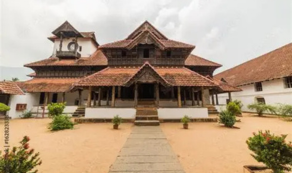
Padmanabhapuram Palace
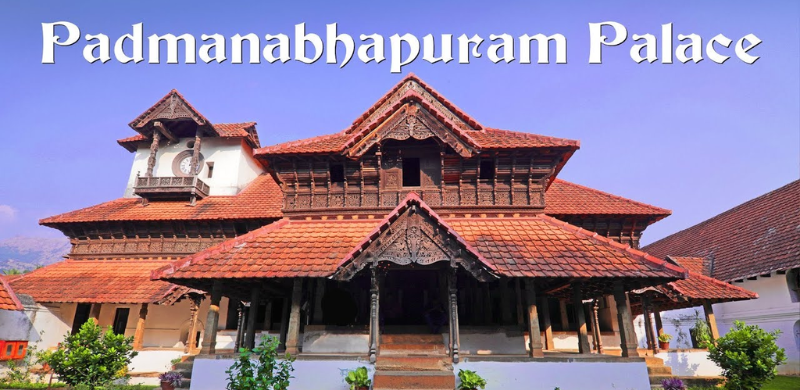
Padmanabhapuram Palace
The magnificence of the Travancore monarchy is reflected in a historic palace close to Kanyakumari, which features typical Keralan architecture, murals from the 17th century, and buildings like Thai Kottaram. Echoing the grandeur of a former royal era, Padmanabhapuram Palace is a stunning tribute to Kerala's rich history and architectural genius. Situated at Thuckalay, 64 kilometres from Thiruvananthapuram, on the way to Kanyakumari, this famous building exemplifies the distinctive indigenous architecture of Kerala's past. The palace, which was formerly the capital of the Travancore state, is a living reminder of an era steeped in custom and luxury.
Visitors are transported to a time of regal splendour by the palace's cool black granite floors, elaborate flower carvings, and murals from the 17th and 18th centuries. Beautiful rosewood carvings, a mahogany melodic bow, coloured mica windows, and finely constructed Far Eastern royal chairs are some of its treasures. The architectural and cultural value of the palace is further demonstrated by the exquisitely painted ceilings of the Queen Mother's palace, or Thai Kottaram. It is a site so magnificent that it may be considered worthy of the gods, and every component speaks to the grandeur of the just monarchs who previously lived there.
The palace was founded historically when Padmanabhapuram became the capital of the Venad kingdom, which subsequently became Travancore. Originally constructed by Iravi Varma Kulasekhara Perumal, the site was carefully selected due to its shielding topography. Under Marthanda Varma, who dedicated the palace to the royal god Sree Padmanabha Swamy, the complex was enlarged and refurbished over time, utilising Vastu Shastra principles.
The Travancore royals turned the palace into a museum in 1934, despite the British taking over in 1809. When Kanyakumari joined Tamil Nadu after India's state reorganisation, prompt action made sure the palace stayed under Kerala's control. It now attracts tourists from all around the world who want to experience its grandeur.
Visitors are welcomed with traditional Keralan architecture as they enter via the Mukhya Vaathil (main entrance). A Roman numeral clock that still operates flawlessly is housed in the Mani Meda (clock tower) in the Poomukhamalika's northern wing. The Thai Kottaram, the oldest building in the palace, is located at its centre and has a nalukettu, or open courtyard, with chambers on four sides. Revered for its ancient mural paintings and religious artefacts like the Sapramancha Kattil, a unique poster bed built from 64 varieties of medicinal timber, the Uppirikka Malika is a majestic, multi-story building that represents royal authority and spirituality.
The Navarathri Mandappam demonstrates the Dravidian architectural influence with its elaborately carved monolith pillars in the Vijayanagara style. Plamuttu Kottaram, Veppinmuttu Kottaram, Valiya Ootupura, Homapura, Ayudhapura, Thekketheruvv Malika, Panthadikalam Malika, Indra Vilasam, and Thekkae Kottaram are among of the complex's other important buildings. When combined, they create an enormous and complicated palace complex.
The historical and architectural richness of Padmanabhapuram Palace is hardly covered by this glimpse. Walking its legendary grounds and picturing the lives and times of the rulers who formerly ruled over the affluent Travancore kingdom are essential to appreciating its history. A doorway into a world of classic elegance and cultural legacy is provided by this encounter, which powerfully brings history to life.

My Trivandrum
Padmanabhapuram PalaceGallery