Anjuthengu Fort

Anjuthengu Fort
As the first trading colony founded in Kerala by the East India Company, Anjuthengu Fort, originally known as Anjengo Fort, will always be remembered in history. Anjuthengu Fort, which is located at Anjuthengu close to Varkala in Kerala's Thiruvananthapuram district, captures the turbulent past of this coastal area. Constructed in 1695 by the East India Company, it was an essential hub for British trade and communication. According to legend, the Queen of Attingal gave this location to the English for trade.
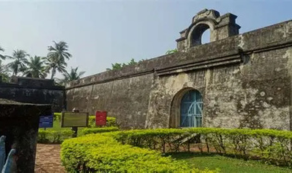
In addition to being the main signalling station for ships arriving from England, the Anjuthengu Fort saw the first uprising against the British in India. It was essential in protecting the East India Company's trading operations. Each of the four bastions that make up the square-shaped fort has eight mounted guns. During the Anglo-Mysore War, it was an essential arms and ammunition storage facility that supported the East India Company's military operations. A cemetery with the graves of British families is also located within the fort.
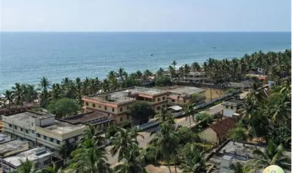
The Anjengo Fort attracts tourists from both nearby and far away due to its striking natural beauty and deep historical relevance. Tourists visiting the fort frequently stop at the nearby immaculate beach, which is decorated with coconut groves. A leisurely walk around the fort is a great experience. The lush courtyard has been turned into a lovely garden, making for a more enjoyable stroll. From the fort, the expansive views of the sea and backwaters are quite stunning. It is the perfect location for a lovely picnic because of the sight of coconut plantations, a golden sand beach, and calm backwaters.
Anjengo and Anchuthengu Fort
On the way to Kadakkavur, Anchuthengu, historically known as Anjengo, is located approximately 12 km from Varkala. Known as an ancient colonial hamlet, it is another seaside town in the Thiruvananthapuram District. Despite its modest size and location sandwiched between the sea and backwaters, the island holds great significance in Indian history as several colonial powers, including the Portuguese, Dutch, and English, attempted to seize it.
Anjengo Fort, which is located between the sea and backwaters, is the main feature of Anchuthengu. On the grounds of the fort, visitors can also view a garden and a few old tombstones.
The place's name, Anchuthengu, literally translates to "five coconut trees," and as the name suggests, coconut trees are grown over the entire area. According to some historians, the place's original Tamil name, Anjingal, is where the name originated. Later generations of locals began referring to this place as Anchuthengu because the British mispronounced it as Anjengo.
Anchuthengu's historical significance is significant. It was the East India Company's first commercial establishment. In 1684, the Queen of Attingal authorised the British, acting through the East India Company, to establish a factory in Anchuthengu. The Anjengo Fort was constructed in 1695 after they were granted permission to construct a fort in 1690. The Anchuthengu town facilitated waterway communication to the North, which aided the company in promoting its trade with other nations. Additionally, they established a depot in Anchuthengu to store military hardware. In summary, this little island quickly rose to prominence as one of the British Empire's main commerce hubs in India, second only to Mumbai.

My Trivandrum
Anjuthengu FortGallery