


Vishu:
Vishu is a time of year when the Southern parts of India and states such as Kerala create a magnificent scene of celebration and festivities to commemorate the start of the Malayalam New Year and the arrival of spring. The event is held around the spring equinox, when day and night are about equal in length.
It is widely celebrated in Kerala and the surrounding Tamil Nadu region, and it is regarded as an important part of their culture and traditions. Let's discover the vibrant world of Vishu via the prism of its origins, cultural history, rituals and traditions, traditional dress, jewellery, and accessories worn by people, and the cultural decor that transforms the state's environment into a festive atmosphere.
Vishu, a festival celebrated largely in Kerala and neighbouring Tamil Nadu, has its roots in mythology and astronomy. The name Vishu comes from Sanskrit and means 'equal'. This reflects the spring equinox since the lengths of day and night are about equal, which coincides with the festival's celebration. The meaning of Vishu mirrors this balance, representing an equal division of light and darkness.
Several mythical stories are related with the celebration. One of the most renowned legends is about Lord Krishna killing the Demon Narakasura. Another story celebrates the Vishu festival as the day Lord Surya returns. It is claimed that Ravana, the demon king, never allowed the sun to rise from the east. The Sun, or Lord Surya, began to rise from the east on Vishu, the day after Ravana's death. The Malayalam New Year is celebrated on the day following Ravana's death, when the sun God rises from the east. The event has been celebrated since the reign of the Chera dynasty emperor, Sthanu Ravi, in the ninth century AD.
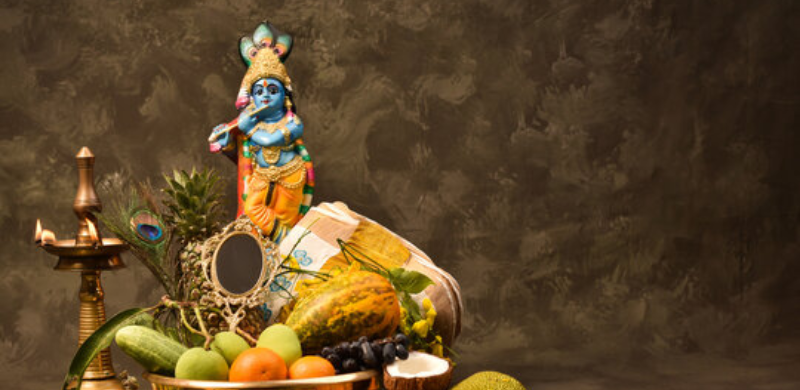
This kaleidoscope of hues and customs is principally dedicated to Lord Vishnu, the Hindu mythological preserver of the universe, and his incarnation, Krishna. Vishu is celebrated over several days, each with its own set of customs and practices. The preparation of the Vishukkani, which translates to the 'first object seen on Vishu in the day', is the festival's centrepiece. It is an arrangement of rice, golden cucumber, coconut, fruits, betel leaves, and Kani Konna flowers that symbolises prosperity.
Holy texts, a metal mirror, and coins are all vital parts of this presentation. It is said that the eldest female member of the family arranges the Vishukkani the night before, allowing the family members to observe it first thing in the morning. The day consists of community meetings, temple visits, and cultural programs. People also congregate to read Ramayana verses and pray for blessings in the New Year.
Another important practice associated with Vishu celebrations is the Vishukkaineetam, in which seniors present money to younger family members as a symbol of good fortune. As the days continue into the evenings, bursting fireworks play an important role in the Vishu celebrations, symbolising victory over darkness and evil. Food, like any other festivity, plays an important part in bringing people together.
A large feast known as the Vishu Sadhya is prepared, featuring a range of traditional dishes such as curries, pickles, rice, and payasam, which successfully depict Kerala's seasonal production and deliciousness. Thoran (a vegetable dish), Vishu Katta, and Vishu Kanji (rice-based sweets) are also popular. On the tenth day following Vishu, oil lamps with ten wicks are lit to represent the power and benefits of the sun, and the day is known as Pathamudayam. While commemorating the Sun's strength, the day is significant astrologically.
Temples in Kerala hold specific communal prayers and rituals to develop a sense of community and promote shared cultural heritage. Because it is celebrated in districts bordering Kerala, Karnataka, and Mahe, the fundamental rites include local customs throughout the festivities. Vishu coincides with Puthandu, the Tamil New Year, and the celebrations contain extra customs unique to Tamil culture.